Turf Toe (Plantar Plate Injury)
Turf Toe In Hawaii
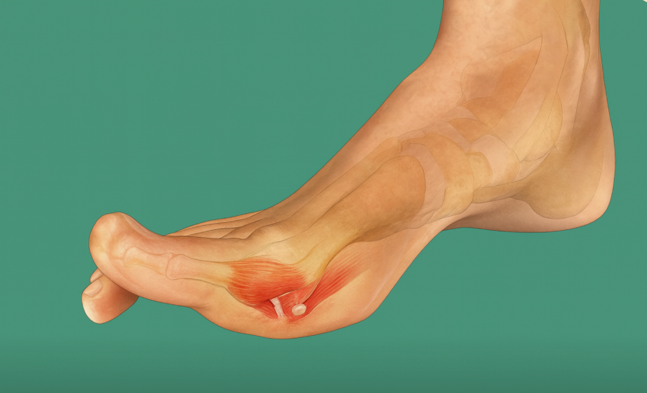
Turf toe is a sprain or injury of the plantar plate and supporting structures of the big toe joint (1st metatarsophalangeal joint). It occurs when the big toe is forcibly bent upward, placing excessive stress on the soft tissues beneath the joint. Turf toe injuries range from mild ligament stretching to complete tears with joint instability.
In Hawaii, turf toe commonly develops during activities that involve sudden push-off, sprinting, jumping, or change of direction, such as beach sports, trail running, pickleball, or recreational athletics performed barefoot or in flexible footwear. Repetitive stress to the big toe joint over time can also contribute to chronic symptoms.
What is turf toe?
The plantar plate is a strong ligamentous structure beneath the big toe joint that provides stability during push-off. Turf toe occurs when this structure is overloaded or torn, often in combination with injury to surrounding ligaments, capsule, or sesamoid complex.
In more severe cases, turf toe can lead to joint instability, loss of push-off strength, swelling, and early arthritis of the big toe joint. Without appropriate treatment, symptoms may become chronic and interfere with walking, athletic activity, and daily function.
Diagnosis of Turf Toe
Diagnosis begins with a focused clinical evaluation, including assessment of pain location, swelling, joint stability, and range of motion. Tenderness beneath the big toe joint and pain with push-off or toe dorsiflexion are common findings.
Symptoms of Turf Toe
Symptoms may include pain at the base of the big toe, swelling, bruising, stiffness, difficulty pushing off while walking or running, and a feeling of weakness or instability in the toe.
Imaging may be used to confirm the diagnosis and assess injury severity. X-rays help evaluate joint alignment and rule out fractures, while MRI is often used to assess plantar plate tears, ligament injury, or associated cartilage damage.
Non-Surgical Treatment
Many turf toe injuries can be treated without surgery, particularly mild to moderate sprains. Non-surgical treatment may include:
Activity modification and rest
Taping or bracing of the big toe
Stiff-soled shoes or orthotics to limit joint motion
Anti-inflammatory medications
Physical therapy focused on strength and mechanics
These treatments aim to protect the joint, reduce pain, and allow healing.
Surgical Treatment
Surgical treatment may be recommended for severe turf toe injuries, complete plantar plate tears, chronic instability, or cases that fail non-surgical management. Surgery may involve repair or reconstruction of the plantar plate and associated soft tissues, and in some cases, correction of associated deformity.
The goal of surgery is to restore joint stability, relieve pain, and improve push-off strength, allowing patients to return to desired activities.
Recovery and Rehabilitation After Turf Toe
Recovery from turf toe depends on injury severity and whether treatment is non-surgical or surgical. Mild injuries may improve over weeks with activity modification, while more severe injuries require a longer recovery period.
Rehabilitation focuses on protecting the big toe joint, restoring range of motion, strengthening surrounding muscles, and gradually reintroducing push-off activities. After surgical treatment, recovery is more structured and may include a period of immobilization followed by progressive weight bearing and physical therapy.
Return to full activity is guided by symptom resolution, joint stability, and functional strength, with the goal of preventing re-injury and long-term joint damage.
Office Location
30 Aulike St. Suite 201
Kailua, HI 96734
Contact Information
scheduling@windortho.net
(808) 261-4658
Surgical Facilities
Castle Medical Center
Windward Surgery Center