Sesamoiditis
Sesamoiditis Treatment in Hawaii
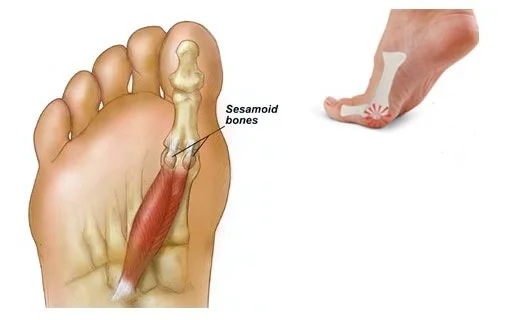
Sesamoiditis is a painful condition involving inflammation or stress-related injury to the sesamoid bones, two small bones located beneath the big toe joint. These bones play an important role in absorbing weight-bearing forces and assisting with push-off during walking and running.
In Hawaii, sesamoiditis often becomes symptomatic in individuals who spend significant time walking barefoot or in minimal footwear, standing for prolonged periods, or engaging in activities that place repetitive stress on the forefoot. Long beach walks, daily walking on hard surfaces, recreational exercise, and activities that involve frequent push-off through the big toe can all increase strain on the sesamoids.
What is Sesamoiditis?
The sesamoid bones function as pulleys for the tendons beneath the big toe, improving mechanical efficiency and protecting surrounding structures. Sesamoiditis develops when repetitive loading leads to irritation, inflammation, or stress injury of these bones and the surrounding soft tissues.
Unlike acute sesamoid fractures, sesamoiditis is typically an overuse condition that develops gradually. Contributing factors include forefoot overload, cavus (high-arch) foot structure, limited big toe motion, and footwear that concentrates pressure beneath the first metatarsal head. If left untreated, symptoms may progress and interfere with normal walking and athletic activity.
Diagnosis of Sesamoiditis
Diagnosis begins with a focused clinical evaluation, including assessment of pain beneath the big toe joint, tenderness with direct pressure, and pain with push-off or toe dorsiflexion. Evaluation of foot mechanics and footwear is an important part of the assessment.
Symptoms of Sesamoiditis
Common symptoms include pain under the ball of the foot near the big toe, swelling or localized tenderness, pain that worsens with walking or running, discomfort when barefoot on hard surfaces, and difficulty with activities that require push-off.
Imaging may be used to support the diagnosis and rule out other pathology. X-rays help differentiate sesamoiditis from fractures or bipartite sesamoids, while MRI or bone scans may be considered in persistent or unclear cases to evaluate for stress injury.
Non-Surgical Treatment Options
Most cases of sesamoiditis improve with non-surgical treatment focused on reducing forefoot load. Conservative options may include:
Activity modification
Cushioning or offloading pads
Supportive footwear or custom orthotics
Temporary immobilization in a boot
Anti-inflammatory medications
These treatments aim to reduce stress across the sesamoids and allow symptoms to resolve.
Surgical Treatment for Sesamoiditis
Surgical treatment is rarely required but may be considered for refractory cases that fail prolonged non-surgical management or when associated pathology is identified. Surgical options may include:
Partial or complete sesamoid excision
Treatment of associated structural abnormalities
The goals of surgery are to relieve pain while preserving function of the big toe joint, allowing patients to return to daily activities with improved comfort.
Recovery and Rehabilitation
Recovery from sesamoiditis centers on reducing forefoot pressure and allowing symptoms to resolve. Non-surgical care is effective in most cases.
Following surgical treatment, recovery emphasizes protection of the big toe joint, gradual return to push-off activities, and long-term pressure management.
Office Location
30 Aulike St. Suite 201
Kailua, HI 96734
Contact Information
scheduling@windortho.net
(808) 261-4658
Surgical Facilities
Castle Medical Center
Windward Surgery Center