Morton’s Neuroma
Morton’s Neuroma Treatment in Hawaii
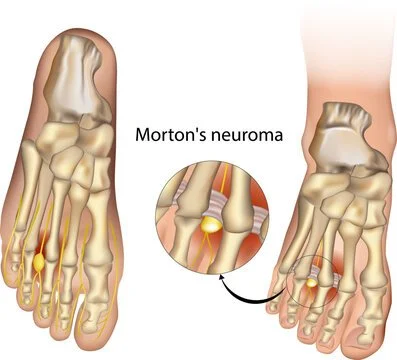
Morton’s neuroma is a painful condition involving irritation and thickening of the nerve between the toes, most commonly between the third and fourth toes. Rather than a true tumor, it represents a nerve compression syndrome that can cause sharp pain, burning, or numbness in the forefoot.
In Hawaii, Morton’s neuroma often becomes symptomatic in people who spend long periods walking in sandals or narrow footwear, standing for extended hours, or walking barefoot on hard surfaces. Activities such as long beach walks, daily commuting on foot, or recreational exercise can increase repetitive pressure across the forefoot and aggravate nerve irritation.
What is Morton’s Neuroma
The nerves supplying sensation to the toes pass between the metatarsal bones in the forefoot. Morton’s neuroma develops when one of these nerves becomes chronically compressed or irritated, leading to nerve enlargement and inflammation.
As the condition progresses, surrounding soft tissues may further crowd the nerve, worsening symptoms. Morton’s neuroma is often associated with forefoot biomechanics such as metatarsal overload, toe deformities, or footwear that places excessive pressure across the ball of the foot. Without appropriate treatment, symptoms can become persistent and limit daily activities.
Diagnosis of Morton’s Neuroma
Diagnosis begins with a focused clinical evaluation, including assessment of pain location, reproduction of symptoms with compression of the forefoot, and evaluation of foot mechanics and footwear.
Symptoms of Morton’s Neuroma
Common symptoms include burning or sharp pain in the ball of the foot, numbness or tingling in the toes, a sensation of walking on a pebble or fold in the sock, pain that worsens with walking or tight shoes, and relief with shoe removal or rest.
Imaging may be used to support the diagnosis or rule out other causes of forefoot pain. Ultrasound or MRI can help identify nerve thickening and exclude stress fractures or joint pathology when symptoms are unclear.
Non-Surgical Treatment Options
Many patients experience relief with non-surgical treatment, particularly when the condition is identified early. Conservative options may include:
Shoe modifications with a wider toe box
Activity modification
Metatarsal pads or custom orthotics
Anti-inflammatory medications
Corticosteroid or anesthetic injections in select cases
These treatments aim to reduce pressure on the nerve and alleviate inflammation.
Surgical Treatment for Morton’s Neuroma
When symptoms persist despite appropriate non-surgical care, surgical treatment may be considered. Surgical options may include:
Excision of the neuroma in select cases
The goals of surgery are to relieve pain, restore comfort with walking and footwear, and improve overall function. Treatment selection depends on symptom severity, duration, and patient activity level.
Recovery and Rehabilitation
Recovery from Morton’s neuroma treatment depends on symptom duration and treatment type. Conservative care focuses on pressure reduction and activity modification.
After surgical treatment, recovery emphasizes wound healing, gradual return to walking, and adaptation to footwear. Most patients return to normal activities within weeks, with continued improvement over time.
Office Location
30 Aulike St. Suite 201
Kailua, HI 96734
Contact Information
scheduling@windortho.net
(808) 261-4658
Surgical Facilities
Castle Medical Center
Windward Surgery Center