Peroneal Tendon Subluxation
Peroneal Tendon Subluxation Treatment in Hawaii
Peroneal tendon subluxation is a condition in which the peroneal tendons slip out of their normal position behind the outer ankle bone (fibula). This instability typically occurs after an ankle injury and can cause pain, snapping sensations, weakness, and recurrent ankle symptoms during activity.
In Hawaii, peroneal tendon subluxation often develops after ankle twisting injuries on uneven terrain, missteps on sand or lava rock, or sudden directional changes during recreational activities. Patients may first notice symptoms while hiking island trails, walking along sloped beaches, or participating in sports that involve cutting or pivoting, particularly following a prior ankle sprain.
What is Peroneal Tendon Subluxation?
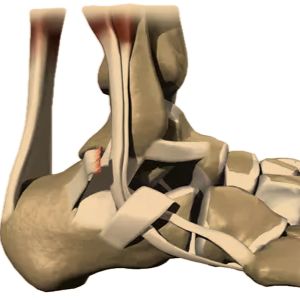
The peroneal tendons run along the outside of the ankle and play a key role in ankle stability and eversion strength. These tendons are held in place by the superior peroneal retinaculum and a bony groove in the fibula.
Peroneal tendon subluxation occurs when the stabilizing structures are disrupted, most commonly due to a traumatic ankle injury. When the retinaculum is torn or the fibular groove is shallow, the tendons can dislocate or subluxate, leading to ongoing instability. Over time, repetitive subluxation can result in tendon tearing, chronic pain, and progressive ankle dysfunction if left untreated.
Diagnosis of Peroneal Tendon Subluxation
Diagnosis begins with a focused clinical evaluation, including assessment of ankle stability, tenderness along the peroneal tendons, and reproduction of symptoms with ankle motion. Some patients may demonstrate visible or palpable tendon movement behind the fibula during activity.
Symptoms of Peroneal Tendon Subluxation
Common symptoms include pain along the outside of the ankle, a snapping or popping sensation with ankle movement, swelling, weakness, feelings of instability, and symptoms that worsen with activity or uneven ground.
Imaging may be used to support the diagnosis and assess associated pathology. MRI can evaluate tendon integrity and soft-tissue injury, while dynamic ultrasound is particularly useful for demonstrating tendon subluxation during motion.
Non-Surgical Treatment Options
Initial treatment may be considered in select cases, particularly after acute injury. Non-surgical options may include:
Immobilization in a boot or cast
Activity modification
Physical therapy
Bracing
However, non-surgical treatment often has limited success in chronic or recurrent peroneal tendon subluxation.
Surgical Treatment for Peroneal Tendon Subluxation
Surgical treatment is commonly recommended for patients with persistent symptoms, recurrent subluxation, or associated tendon tearing. Surgical options depend on injury severity and anatomy and may include:
Repair or reconstruction of the superior peroneal retinaculum
Deepening of the fibular groove
Treatment of associated peroneal tendon tears
The goals of surgery are to restore tendon stability, relieve pain, and prevent further tendon damage, allowing patients to return to daily activities and sports.
Recovery and Rehabilitation
Recovery depends on injury chronicity and treatment method. Non-surgical care focuses on immobilization and symptom control.
After surgical stabilization, rehabilitation includes protected weight bearing, gradual strengthening, and restoration of ankle stability. Return to higher-level activity occurs progressively.
Office Location
30 Aulike St. Suite 201
Kailua, HI 96734
Contact Information
scheduling@windortho.net
(808) 261-4658
Surgical Facilities
Castle Medical Center
Windward Surgery Center