Tibiotalar Allograft Reconstruction Surgery
Tibiotalar Allograft Reconstruction Surgery in Hawaii
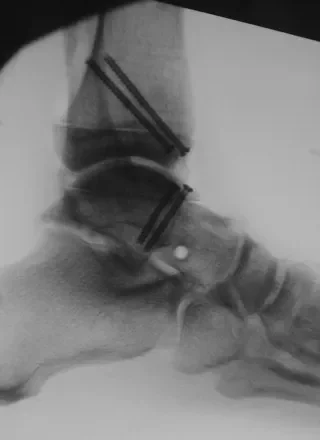
Tibiotalar allograft reconstruction is a joint-preserving surgical procedure used to treat focal or extensive cartilage and bone loss of the ankle joint, most commonly involving the talar dome or tibial plafond. The procedure aims to restore joint surface anatomy using donor (allograft) bone and cartilage, allowing pain relief while preserving ankle motion.
This procedure is typically considered for patients with post-traumatic ankle arthritis, osteochondral defects, or joint surface collapse who are not ideal candidates for ankle fusion or total ankle replacement and wish to maintain joint motion.
How Surgery Is Performed
Tibiotalar allograft reconstruction involves removing damaged cartilage and bone from the ankle joint and replacing it with a size-matched osteochondral allograft. The graft is carefully shaped to restore the contour of the joint surface and secured in place to allow incorporation and healing.
The procedure may be performed through an open approach and is often combined with additional procedures to address alignment, stability, or associated pathology.
Goals of surgery include:
Restoring joint surface anatomy of the ankle
Relieving pain caused by cartilage and bone loss
Preserving ankle motion
Delaying or avoiding ankle fusion or replacement
Recovery After Surgery
Recovery following tibiotalar allograft reconstruction is structured and protective, reflecting the need for graft incorporation and joint healing.
Typical recovery progression includes:
Prolonged period of non–weight bearing to protect the graft
Gradual progression to partial and then full weight bearing as healing allows
Physical therapy focused on restoring ankle motion, strength, and gait mechanics
Slow, controlled return to daily activities over several months
Full recovery may take many months, and close follow-up is required to monitor graft integration and joint health.
Risks and Considerations
Potential risks include infection, graft failure or non-integration, stiffness, persistent pain, progression of arthritis, or need for future surgery such as ankle fusion or replacement. Outcomes depend on graft incorporation, joint alignment, and adherence to postoperative rehabilitation.
Careful patient selection is critical, and this procedure is typically reserved for motivated patients with appropriate anatomy and expectations.
Office Location
30 Aulike St. Suite 201
Kailua, HI 96734
Contact Information
scheduling@windortho.net
(808) 261-4658
Surgical Facilities
Castle Medical Center
Windward Surgery Center