Ankle Fractures
Ankle Fracture Treatment in Kailua, Hawaii
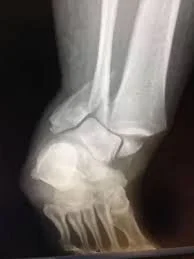
An ankle fracture is a break in one or more of the bones that form the ankle joint, most commonly the tibia (shinbone), fibula (outer leg bone), and occasionally the talus, which connects the leg to the foot. Ankle fractures are common lower extremity injuries and may occur after a twisting injury, fall, sports-related trauma, or high-energy accidents such as motor vehicle collisions.
At our foot and ankle orthopedic practice in Kailua, Hawaii, we specialize in the evaluation and treatment of ankle fractures, providing both non-surgical and surgical care for patients throughout Kailua, Honolulu, and across Oʻahu.
What Is an Ankle Fracture?
An ankle fracture occurs when excessive force causes one or more bones of the ankle joint to break. The severity of an ankle fracture can range from a simple, stable injury to a complex fracture involving multiple bones and joint instability.
Common mechanisms of injury include:
Twisting or rolling the ankle
Slips and falls
Sports injuries
Motor vehicle or high-impact trauma
Because the ankle is a weightbearing joint, proper alignment and healing are critical to restoring normal walking and preventing long-term complications.
Types of Ankle Fractures
Ankle fractures are classified based on which bones are involved and whether the ankle joint remains stable. Common types include:
Isolated fibula fractures
Medial malleolus fractures
Bimalleolar fractures (involving two bones)
Trimalleolar fractures (involving three bones)
More complex fractures may be associated with ligament injury, joint displacement, or instability, which often requires surgical treatment to restore proper alignment.
Diagnosis of Ankle Fractures
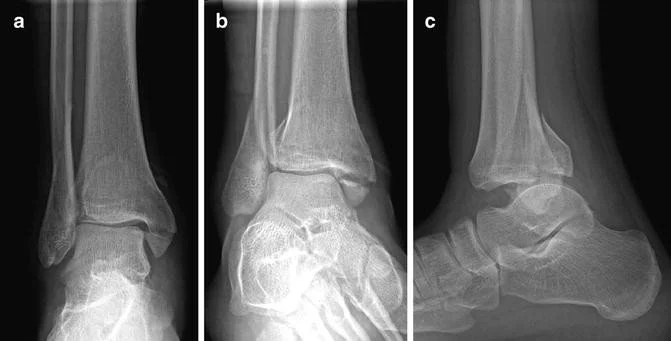
Diagnosis begins with a thorough history and physical examination, followed by X-ray imaging to evaluate fracture location, alignment, and joint involvement. In certain cases, CT scans may be used to better assess complex fractures and assist with surgical planning.
Symptoms of an Ankle Fracture
Patients with an ankle fracture may experience:
Immediate pain around the ankle
Swelling and bruising
Difficulty or inability to bear weight
Ankle deformity or instability in severe cases
Tenderness to touch
Any suspected ankle fracture should be evaluated promptly by a foot and ankle orthopedic surgeon, as delayed treatment can negatively affect outcomes.
Non-Surgical Treatment Options
Some ankle fractures can be treated non-operatively when the bones remain well aligned and the ankle joint is stable. Non-surgical treatment may include:
Immobilization in a cast or walking boot
Temporary non-weightbearing or protected weightbearing
Close follow-up with repeat imaging
Stable fractures treated non-surgically can heal reliably with appropriate immobilization and rehabilitation.
Ankle fracture surgery is recommended when fractures are displaced, unstable, or involve the ankle joint surface. Surgery typically involves open reduction and internal fixation (ORIF) using plates and screws to restore normal alignment and stability.
The goals of surgical treatment include:
Anatomical restoration of the ankle joint
Stable fixation to allow healing
Preservation of ankle motion
Reduction of long-term complications such as post-traumatic arthritis
Recovery and Rehabilitation After Ankle Fracture
Recovery depends on fracture severity and treatment approach. After surgery or immobilization, patients typically progress through:
A period of non-weightbearing or limited weightbearing
Gradual return to walking
Physical therapy to restore strength, motion, and balance
Most patients return to daily activities within 3 to 6 months, though full recovery may take longer for complex fractures or high-impact activities.
Risks and Long-Term Considerations
Even with appropriate treatment, ankle fractures can increase the risk of post-traumatic ankle arthritis, stiffness, or chronic pain. Proper fracture alignment, rehabilitation, and follow-up care are essential to achieving the best possible outcome.
Office Location
30 Aulike St. Suite 201
Kailua, HI 96734
Contact Information
scheduling@windortho.net
(808) 261-4658
Surgical Facilities
Castle Medical Center
Windward Surgery Center