Foot Drop
Foot Drop Treatment in Hawaii
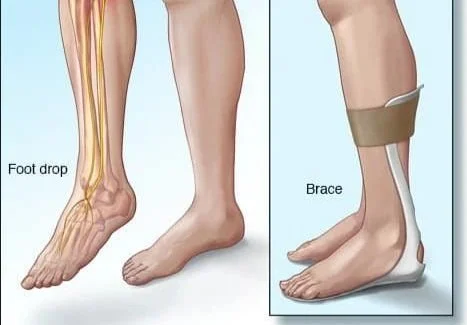
Foot drop is a condition characterized by difficulty lifting the front part of the foot during walking, causing the toes to drag or slap the ground. Rather than a disease itself, foot drop is a sign of an underlying neurologic, muscular, or structural problem affecting the muscles responsible for ankle and toe dorsiflexion.
In Hawaii, foot drop may become apparent during daily activities such as walking long distances, navigating uneven terrain, hiking island trails, or even walking barefoot on hard surfaces. Patients often first notice symptoms when they begin tripping more frequently, feel unsteady on inclines, or struggle to clear the foot while walking.
What is Foot Drop?
Normal walking requires coordinated activation of muscles in the front of the leg that lift the foot during the swing phase of gait. Foot drop occurs when these muscles are weakened or paralyzed, most commonly due to nerve dysfunction, but it may also result from muscle injury or central neurologic conditions.
Common causes of foot drop include injury or compression of the peroneal nerve, lumbar spine pathology, prior trauma, surgical complications, or neurologic disorders. In some cases, foot drop may develop gradually, while in others it appears suddenly following injury or surgery.
Without appropriate treatment, foot drop can significantly alter gait mechanics and increase the risk of falls, ankle instability, and secondary foot and ankle problems.
Diagnosis of Foot Drop
Diagnosis of foot drop begins with a detailed clinical evaluation, focusing on muscle strength, sensory changes, reflexes, and gait mechanics. Particular attention is paid to the ability to dorsiflex the ankle and toes, as well as to areas of numbness or tingling in the lower extremity.
Symptoms of Foot Drop
Common symptoms include difficulty lifting the foot while walking, frequent tripping or stumbling, a slapping gait as the foot hits the ground, weakness in the ankle or toes, numbness or tingling along the lower leg or foot, and fatigue with prolonged walking.
Diagnostic testing may include electrodiagnostic studies such as nerve conduction studies or electromyography to assess nerve function. Imaging studies, including MRI of the lumbar spine or lower extremity, may be obtained to identify nerve compression or other contributing pathology.
Non-Surgical Treatment Options
Management of foot drop depends on the underlying cause and severity. Non-surgical treatment options may include:
Activity modification
Physical therapy to improve strength and gait mechanics
Bracing or ankle-foot orthoses (AFOs)
Nerve-related medications when appropriate
These treatments aim to improve function, stability, and safety during walking.
Surgical Treatment for Foot Drop
When non-surgical treatment is insufficient or when a structural cause is identified, surgical intervention may be considered. Surgical options depend on the underlying pathology and may include:
Nerve decompression or repair
Tendon transfer procedures to restore active dorsiflexion
Treatment of associated foot or ankle deformities
The goal of surgery is to improve gait mechanics, restore functional movement, and reduce the risk of falls, while addressing the root cause of the condition whenever possible.
Recovery and Rehabilitation
Recovery from foot drop depends on the underlying cause and treatment approach. Non-surgical management focuses on improving safety, gait mechanics, and functional mobility.
Following surgical treatment, rehabilitation emphasizes retraining ankle motion, strengthening transferred tendons when applicable, and improving walking efficiency. Bracing or assistive devices may be used during recovery to support safe ambulation.
Office Location
30 Aulike St. Suite 201
Kailua, HI 96734
Contact Information
scheduling@windortho.net
(808) 261-4658
Surgical Facilities
Castle Medical Center
Windward Surgery Center