
Foot Stress Fracture
Stress Fracture of the Foot Treatment in Hawaii
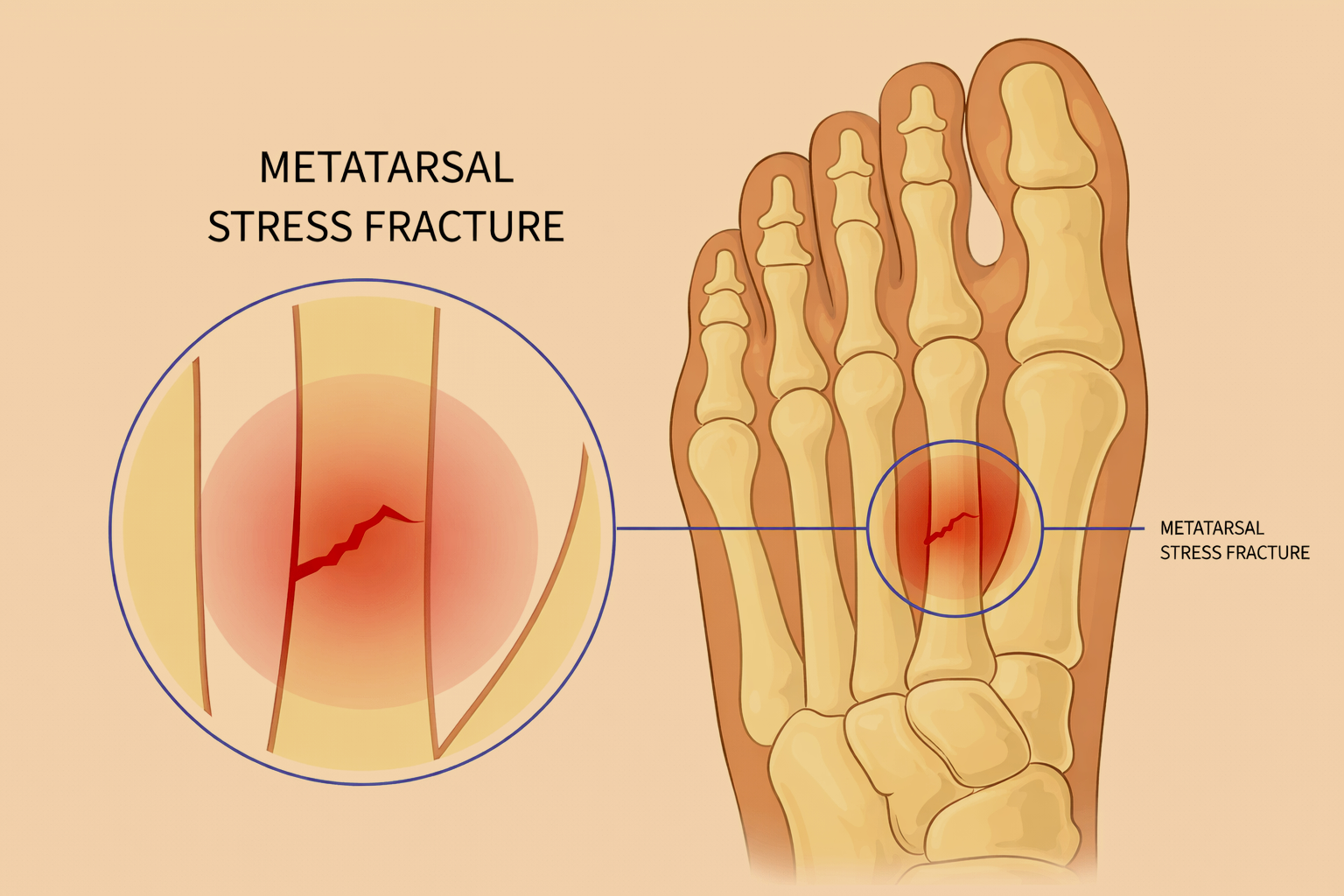
Stress fractures of the foot are small cracks in the bone that develop from repetitive loading and overuse, rather than a single traumatic event. These injuries commonly affect the metatarsals but can also involve the calcaneus, navicular, cuboid, or other bones of the foot. Stress fractures may begin subtly and worsen over time if activity continues.
In Hawaii, foot stress fractures frequently occur in individuals who increase activity levels quickly, such as long beach walks, trail hiking, running on uneven terrain, or prolonged standing on hard surfaces. Walking barefoot or in minimal footwear can further increase repetitive stress across the foot and contribute to injury.
What are Stress Fractures of the Foot?
Bone continuously remodels in response to stress. A stress fracture develops when repetitive forces exceed the bone’s ability to repair itself, leading to microscopic damage that progresses to a fracture. Certain areas of the foot are more vulnerable due to high load and limited blood supply.
Risk factors include sudden increases in activity, inadequate footwear, abnormal foot mechanics, low bone density, nutritional deficiencies, and repetitive impact. Some stress fractures—such as those involving the navicular or proximal fifth metatarsal—are considered high-risk because they are more prone to delayed healing or nonunion.
Diagnosis of Stress Fractures of the Foot
Diagnosis begins with a focused clinical evaluation, assessing activity history, pain location, swelling, and tenderness over the affected bone. Early stress fractures may not be visible on initial imaging, making clinical suspicion important.
Symptoms of Stress Fractures of the Foot
Common symptoms include localized foot pain that worsens with activity, tenderness to touch over a specific bone, swelling, pain that improves with rest but returns with activity, and discomfort with weight bearing as the injury progresses.
Imaging is often required to confirm the diagnosis. X-rays may appear normal early on, while MRI is highly sensitive for detecting stress injuries and bone edema. CT scans may be used in select cases to evaluate healing or fracture detail.
Non-Surgical Treatment Options
Many stress fractures of the foot can be treated without surgery, particularly when identified early. Non-surgical management may include:
Activity modification and rest
Immobilization in a boot or cast
Protected or non-weight bearing as indicated
Gradual return to activity once healing is confirmed
Close follow-up is important to ensure proper healing and prevent progression of the fracture.
Surgical Treatment for Stress Fractures of the Foot
Surgical treatment may be recommended for high-risk stress fractures, fractures that fail to heal with conservative care, or injuries in active individuals requiring reliable healing. Surgical options depend on fracture location and may include:
Internal fixation to promote healing
Bone grafting in select cases
The goals of surgery are to achieve predictable bone healing, relieve pain, and allow safe return to activity, while minimizing the risk of recurrence.
Recovery and Rehabilitation
Recovery depends on fracture location and risk profile. Early recovery emphasizes rest and protection of the injured bone.
Rehabilitation progresses with gradual return to weight bearing and activity once healing is confirmed. High-risk fractures may require extended recovery and close monitoring.
Office Location
30 Aulike St. Suite 201
Kailua, HI 96734
Contact Information
scheduling@windortho.net
(808) 261-4658
Surgical Facilities
Castle Medical Center
Windward Surgery Center